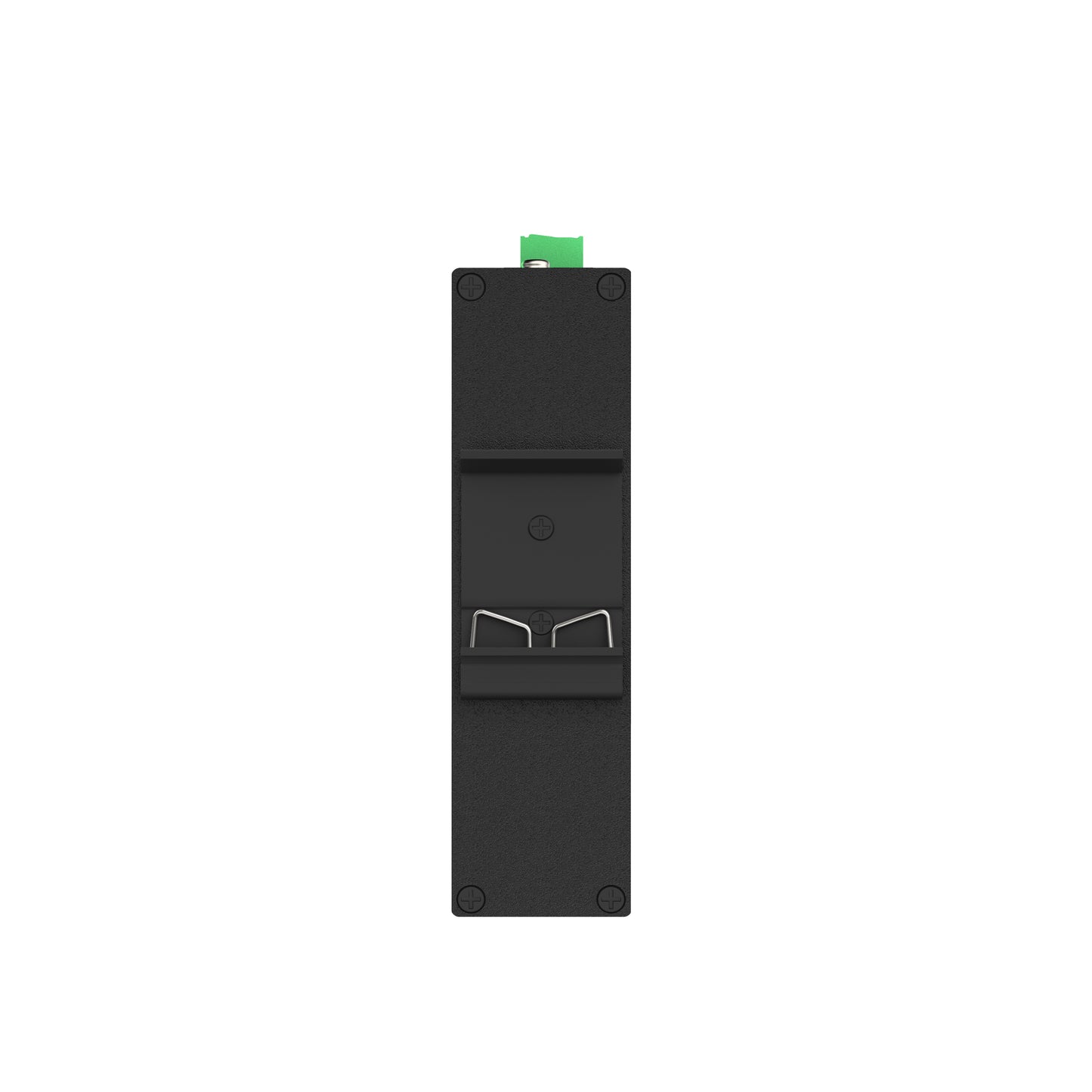
What is an industrial PoE switch and how does it work?
+
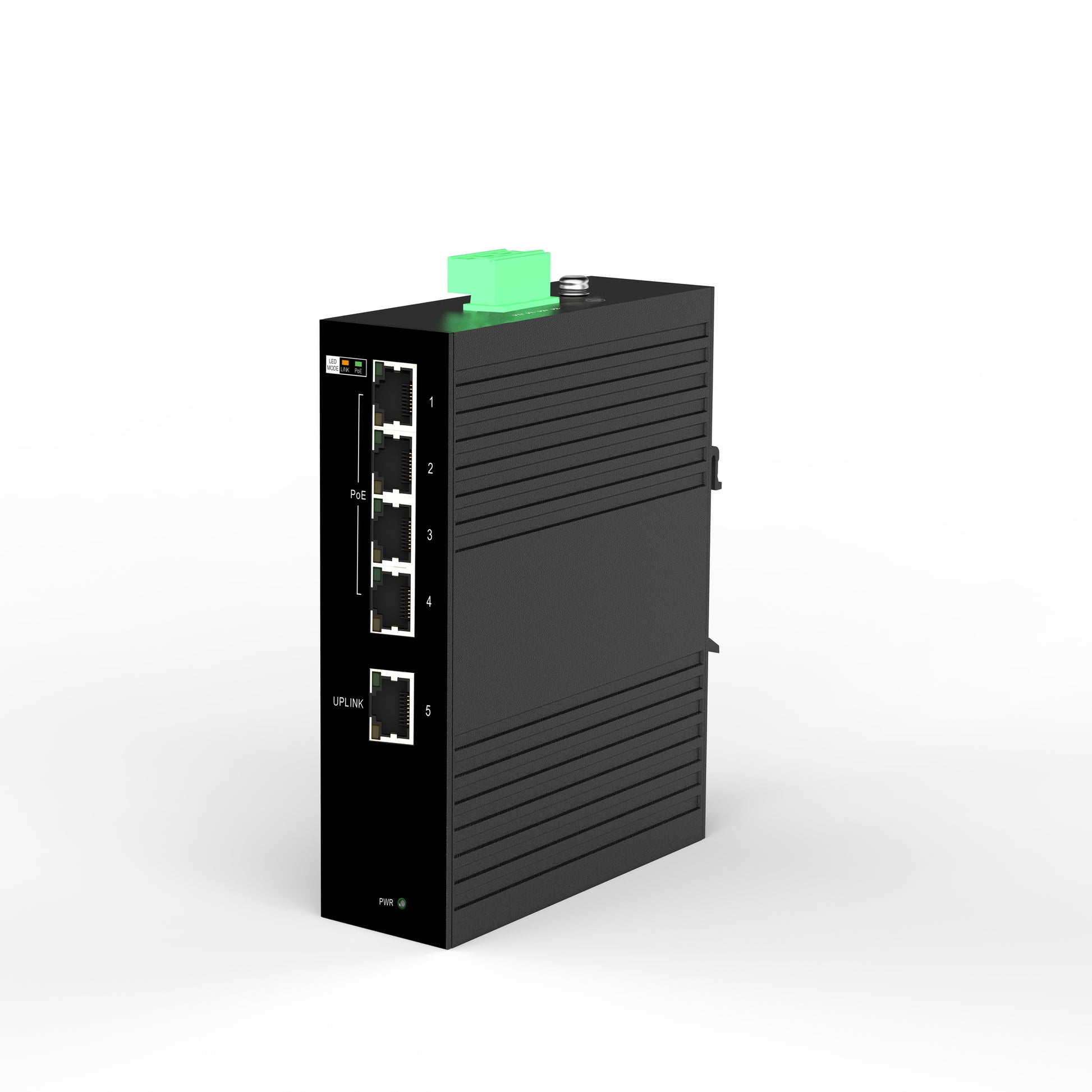
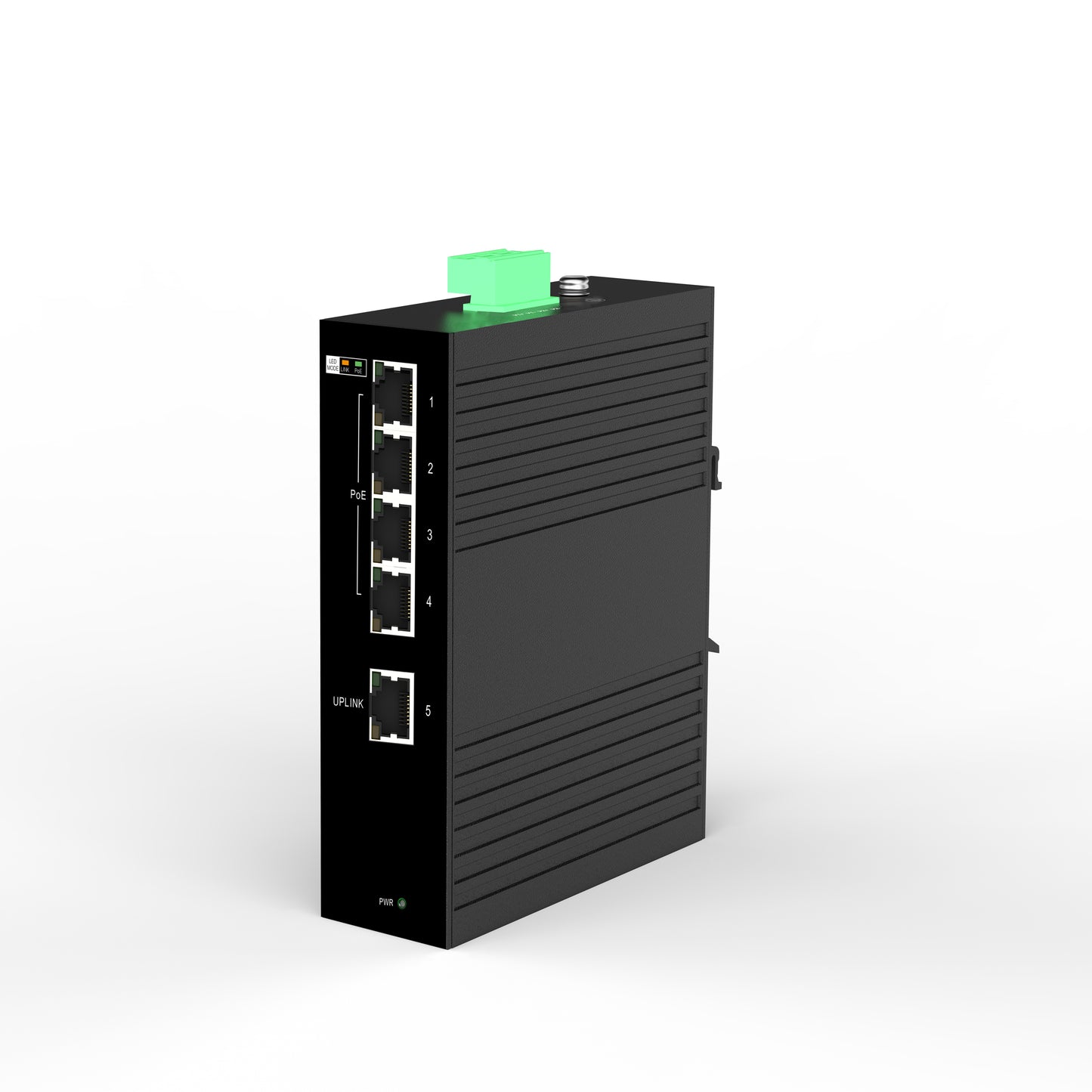
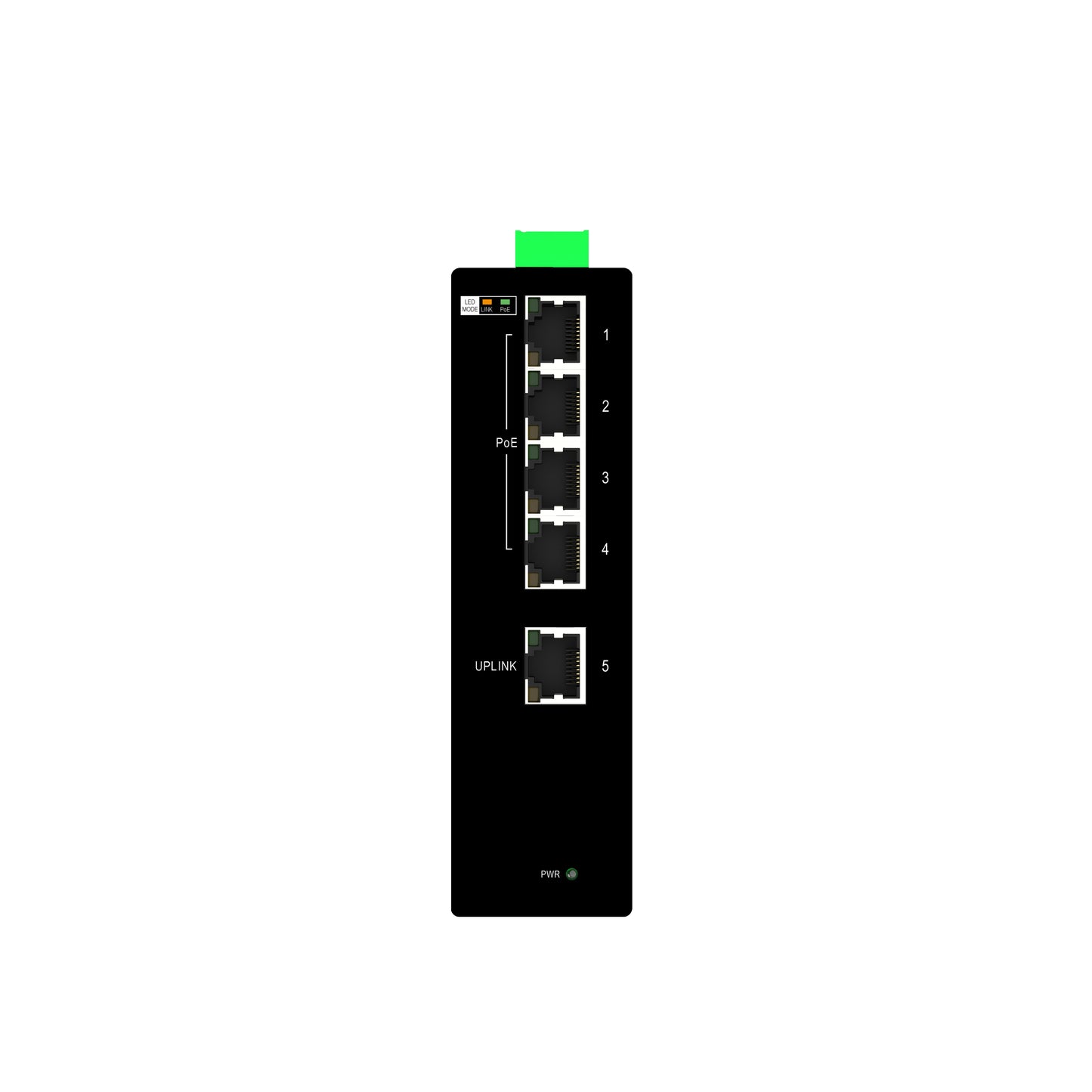
An industrial PoE switch combines Ethernet data switching and Power over Ethernet in one device. It can transmit network data and DC power to compatible powered devices through the same Ethernet cable, reducing separate power wiring. Industrial models are designed for applications such as surveillance, wireless networking and factory automation where wider operating temperatures and more robust installation are required.
What devices can an industrial PoE switch power?
+
An industrial PoE switch can power compatible devices such as IP cameras, wireless access points, VoIP phones, industrial terminals and other IEEE 802.3af, 802.3at or 802.3bt powered devices. The actual devices that can be powered depend on the PoE standard, maximum power per port and total PoE budget of the switch.
What is the difference between PoE power per port and total PoE budget?
+
Maximum power per port is the highest power one PoE port can provide, while total PoE budget is the maximum power available across all PoE ports combined. For example, a switch may support up to 30W per port but have a total PoE budget lower than the sum of all port maximums. Both values should be checked when selecting a PoE switch.
Can all PoE ports be used at the same time?
+
Yes, multiple PoE ports can normally operate at the same time, provided the combined power consumption of all connected powered devices remains within the switch's total PoE budget. If several high-power devices are connected, calculate their total power requirement before deployment.
Can I connect non-PoE devices to a PoE switch?
+
Yes. Standards-compliant PoE switches detect whether a connected device requires PoE power before supplying power. A compatible non-PoE Ethernet device can therefore use the data connection without requesting PoE power. Always confirm the switch and connected device follow the applicable IEEE PoE standards.
How far can a PoE switch transmit power and data over Ethernet?
+
Standard copper Ethernet connections are typically designed for transmission distances up to 100 meters. The actual distance can depend on cable category, cable quality, power level, network speed and installation environment. If a longer connection is required, consider fiber uplinks, PoE extenders or other suitable network designs.
Why choose an industrial PoE switch instead of a standard PoE switch?
+
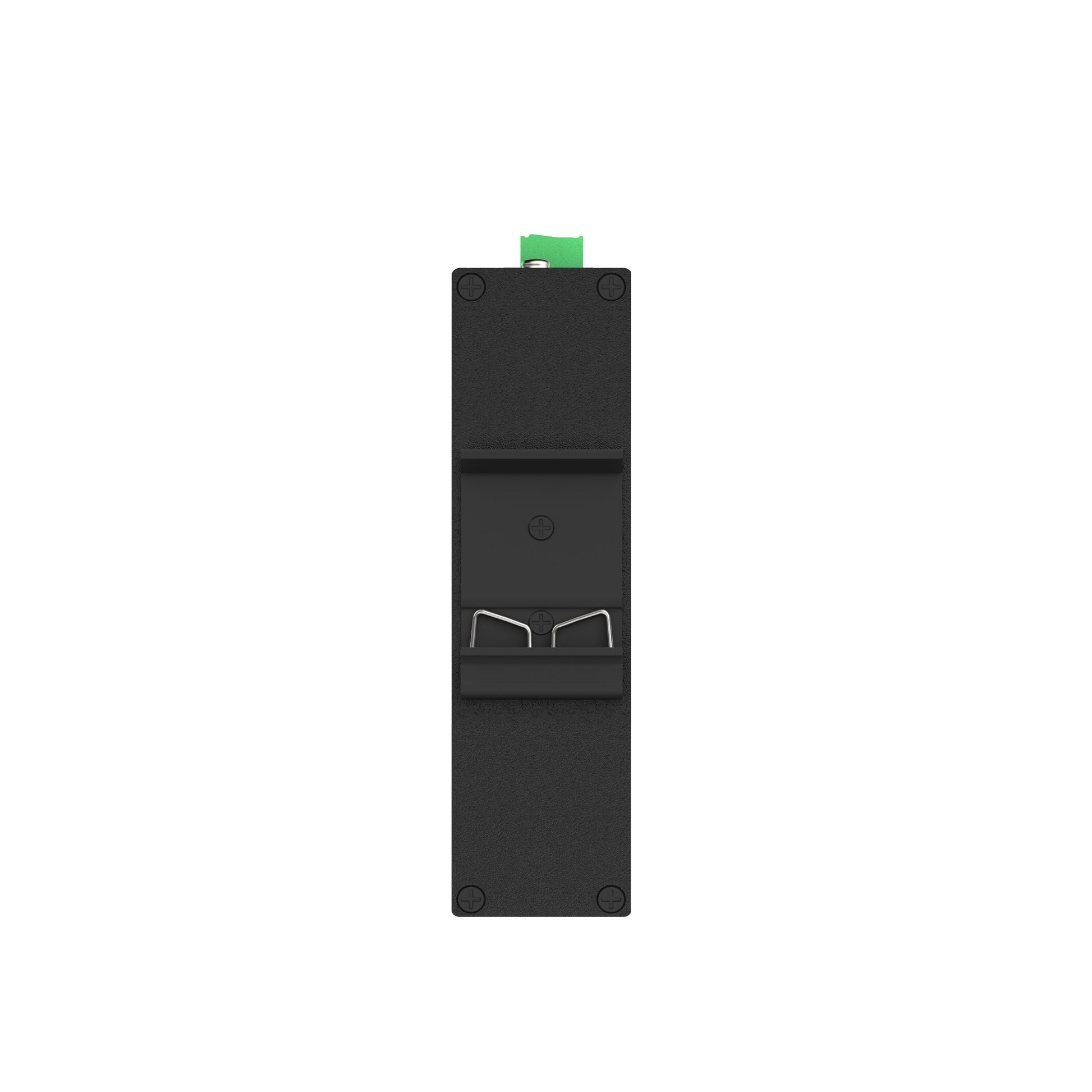
Industrial PoE switches are designed for environments where standard commercial switches may not be suitable. Depending on the model, they can provide wide-temperature operation, DIN-rail mounting, metal enclosures, surge protection and industrial DC power input. They are commonly used in factories, roadside systems, surveillance cabinets and other edge network environments.
What should I check before choosing an industrial PoE switch?
+
Check the number and speed of Ethernet ports, uplink type, PoE standard, maximum power per port, total PoE budget, input voltage, operating temperature and mounting method. For managed networks, also check VLAN, QoS, IGMP Snooping, redundancy and management features required by the application.
What is an unmanaged industrial PoE switch?
+
An unmanaged industrial PoE switch is designed for plug-and-play Ethernet and PoE connectivity without software configuration. It automatically forwards network traffic and provides PoE power to compatible devices, making it suitable for straightforward industrial, surveillance and edge network deployments.
Does an unmanaged PoE switch require configuration?
+
Normally no. An unmanaged PoE switch is designed to operate without Web, CLI or SNMP configuration. Connect the power supply, network uplink and compatible powered devices, and the switch can begin forwarding Ethernet traffic and supplying PoE power automatically.
What are SFP uplink ports used for on an industrial PoE switch?
+
SFP uplink ports allow the switch to connect to an upstream network over fiber when a compatible transceiver is installed. Fiber uplinks are useful for longer network distances, electrical isolation and connections between industrial cabinets, buildings or surveillance network locations.
What is the difference between IEEE 802.3af PoE and IEEE 802.3at PoE+?
+
IEEE 802.3af is the original PoE standard, while IEEE 802.3at, commonly called PoE+, supports a higher power level for compatible powered devices. PoE+ is commonly used for devices such as higher-performance wireless access points, PTZ cameras and other equipment requiring more power than standard PoE can provide.
Can a PoE+ switch power standard IEEE 802.3af PoE devices?
+
Yes. IEEE 802.3at PoE+ is designed to be backward compatible with IEEE 802.3af powered devices when both the switch and device follow the IEEE standards. The switch negotiates the appropriate power level based on the connected device.