
Product Details
Technical specifications, PoE power information, installation and compatibility.
Specifications
Ethernet
Data Rate
10/100/1000Base-T
Data Input Port
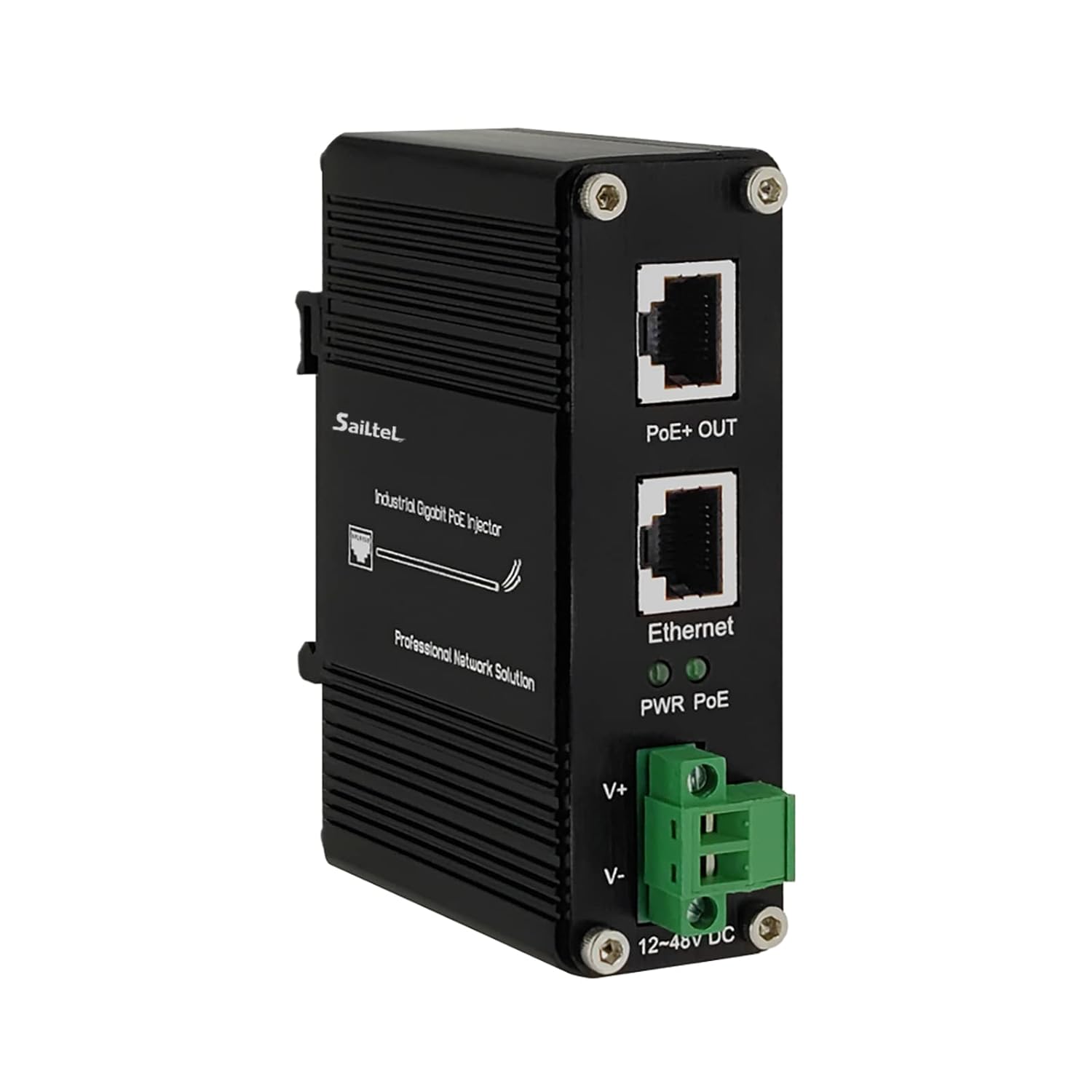
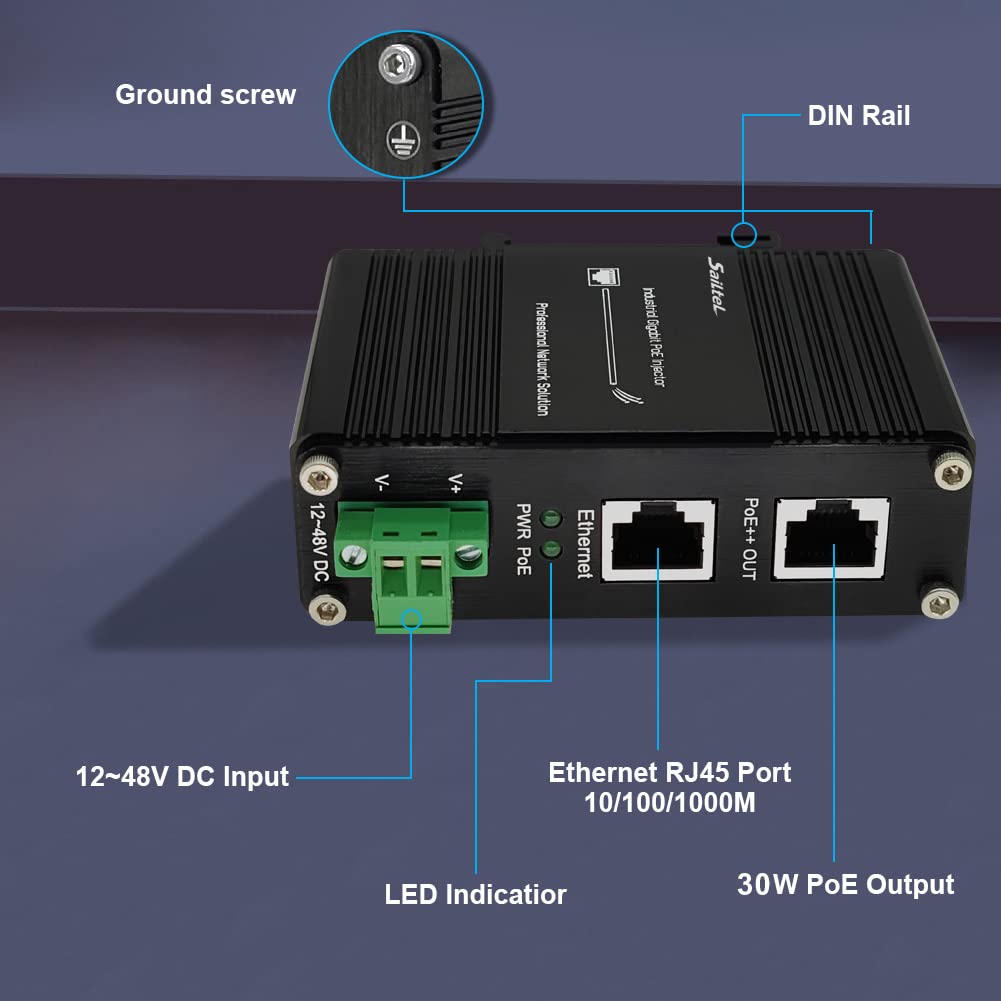
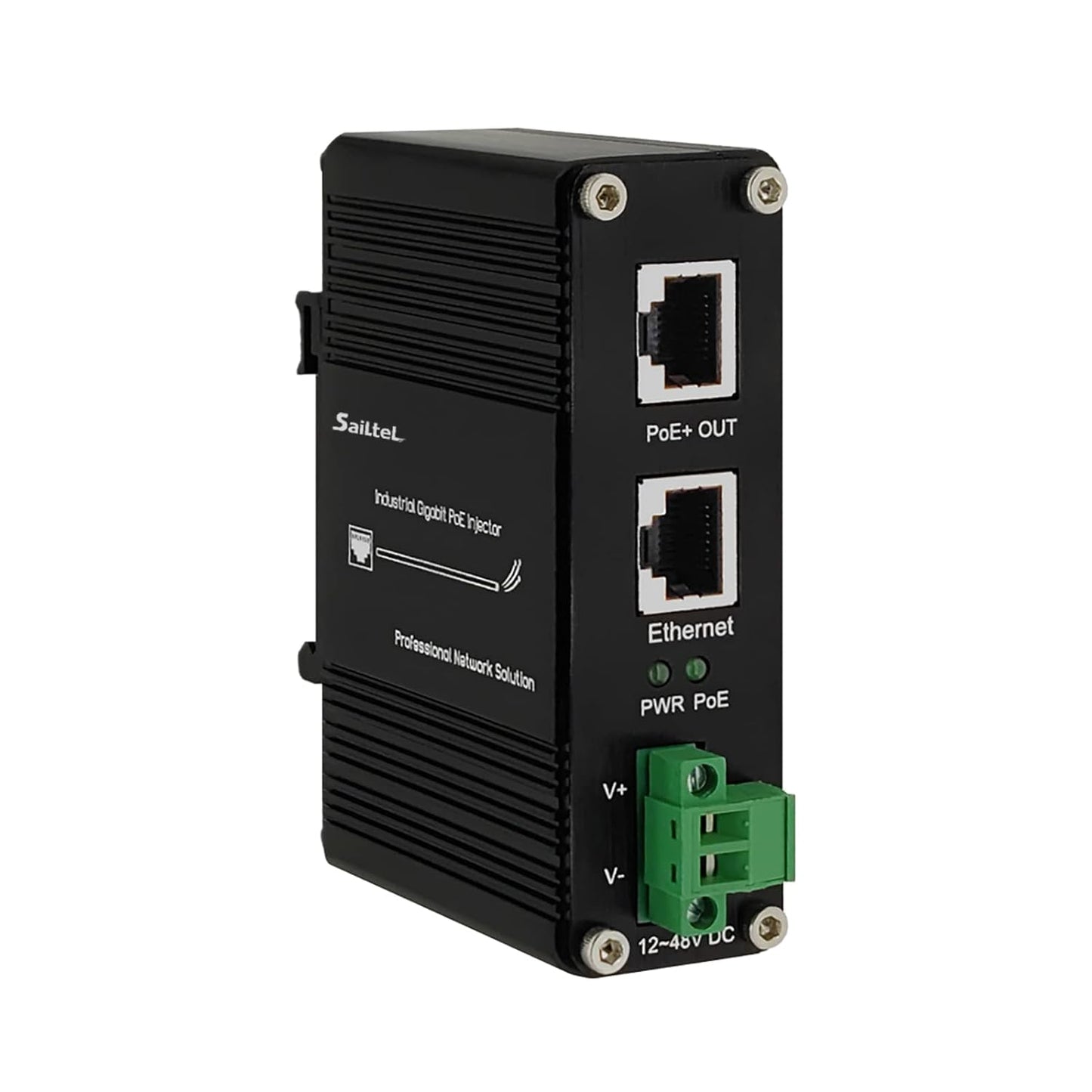
1 × RJ45 Ethernet Data Input
PoE Output Port
1 × RJ45 PoE Output (Data + Power)
Power over Ethernet
PoE Standard
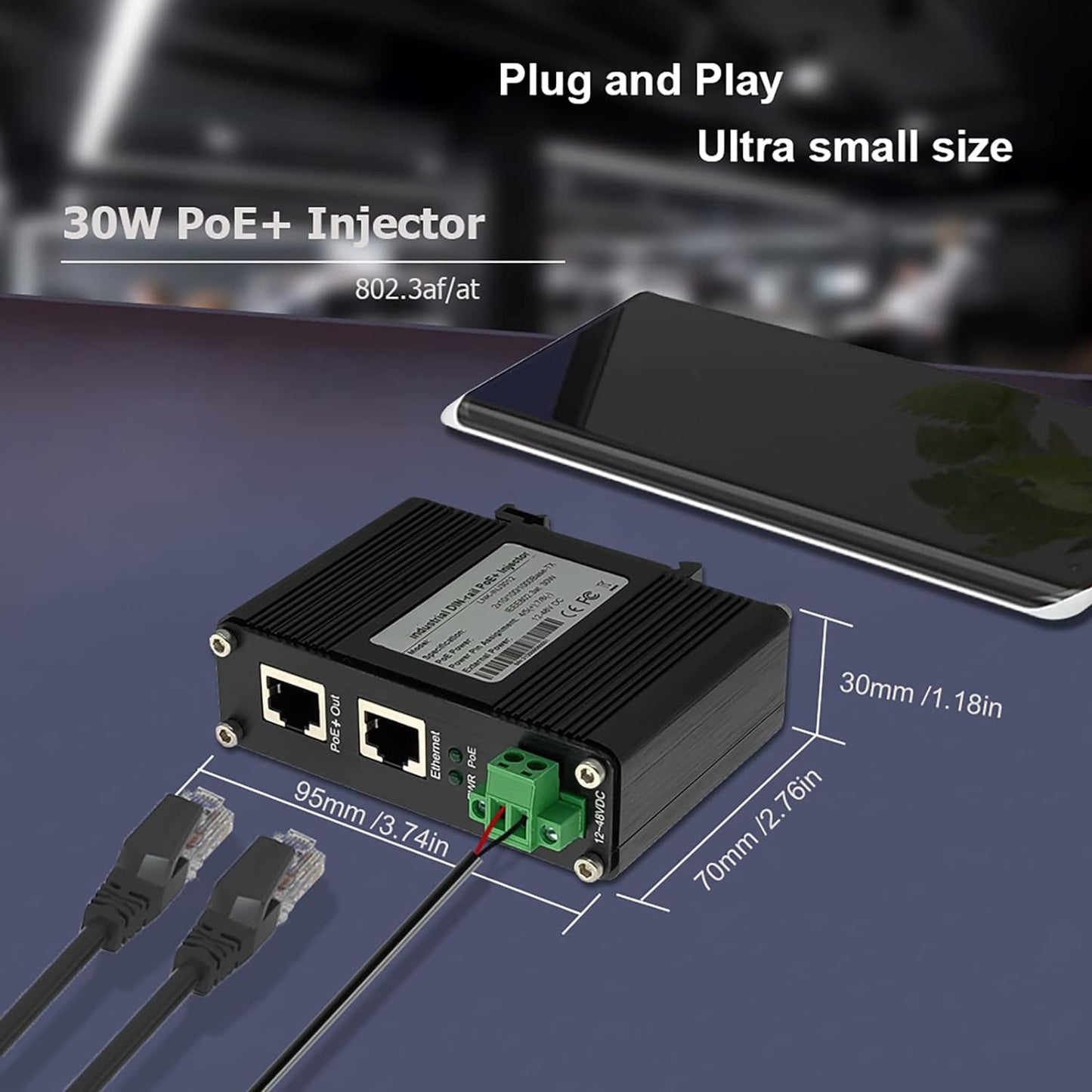
IEEE 802.3af / IEEE 802.3at
Input Voltage
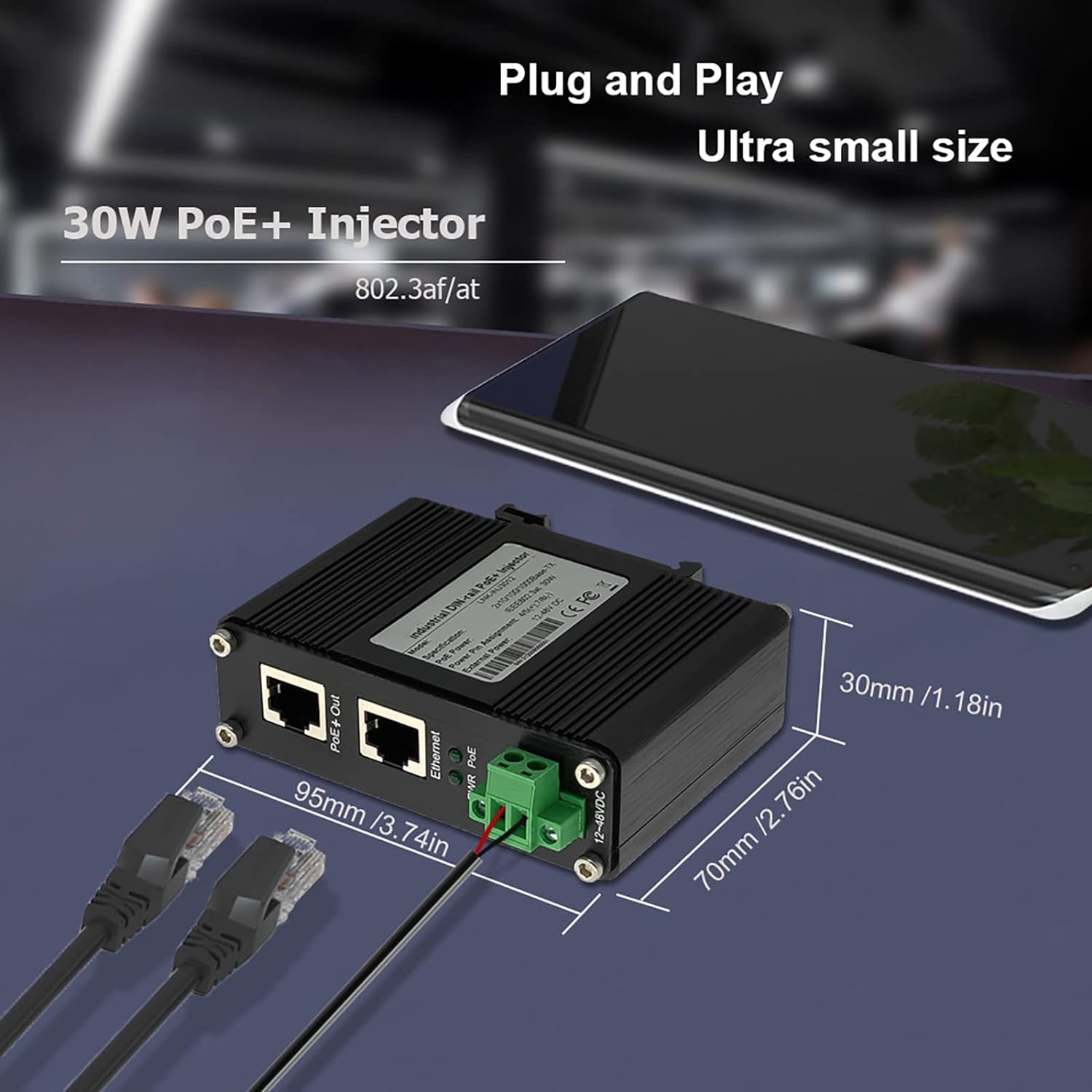
12–48V DC
Maximum PoE Output
30W
Environmental
Operating Temperature
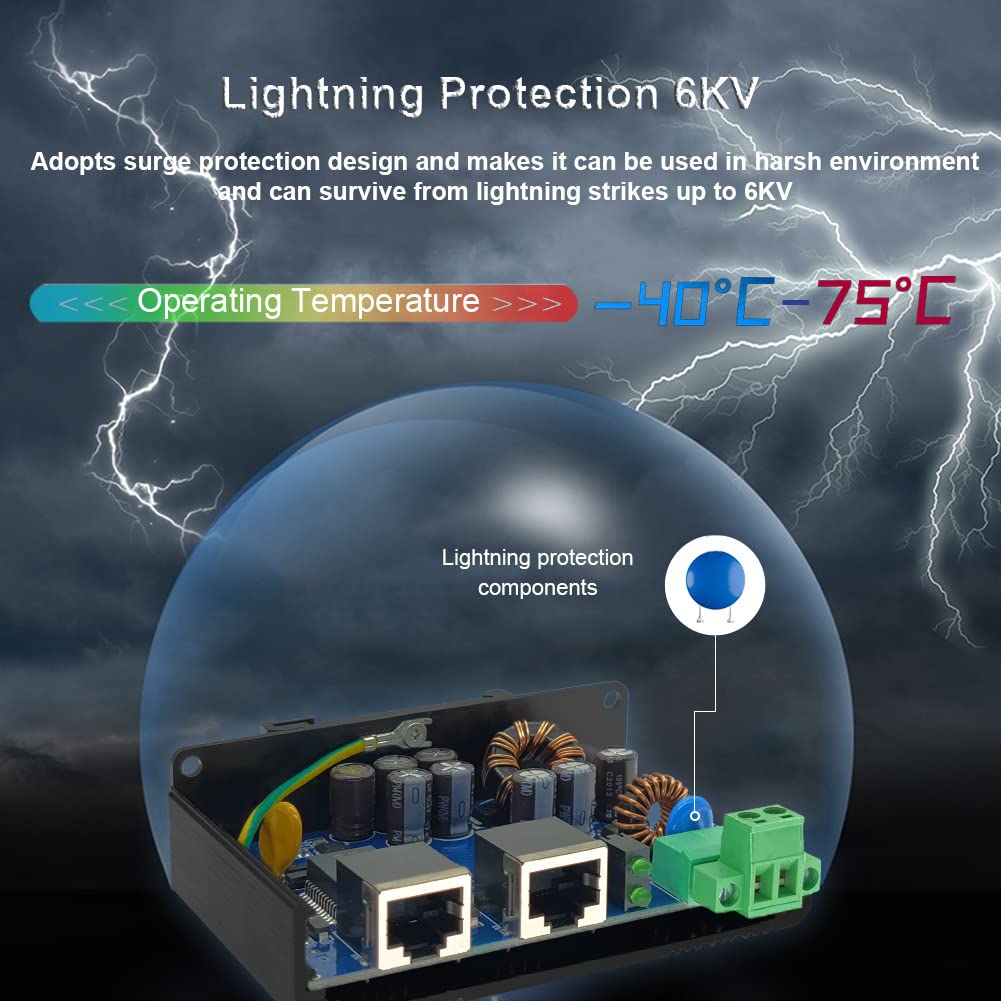
-40°C to 80°C
Mechanical
Mounting
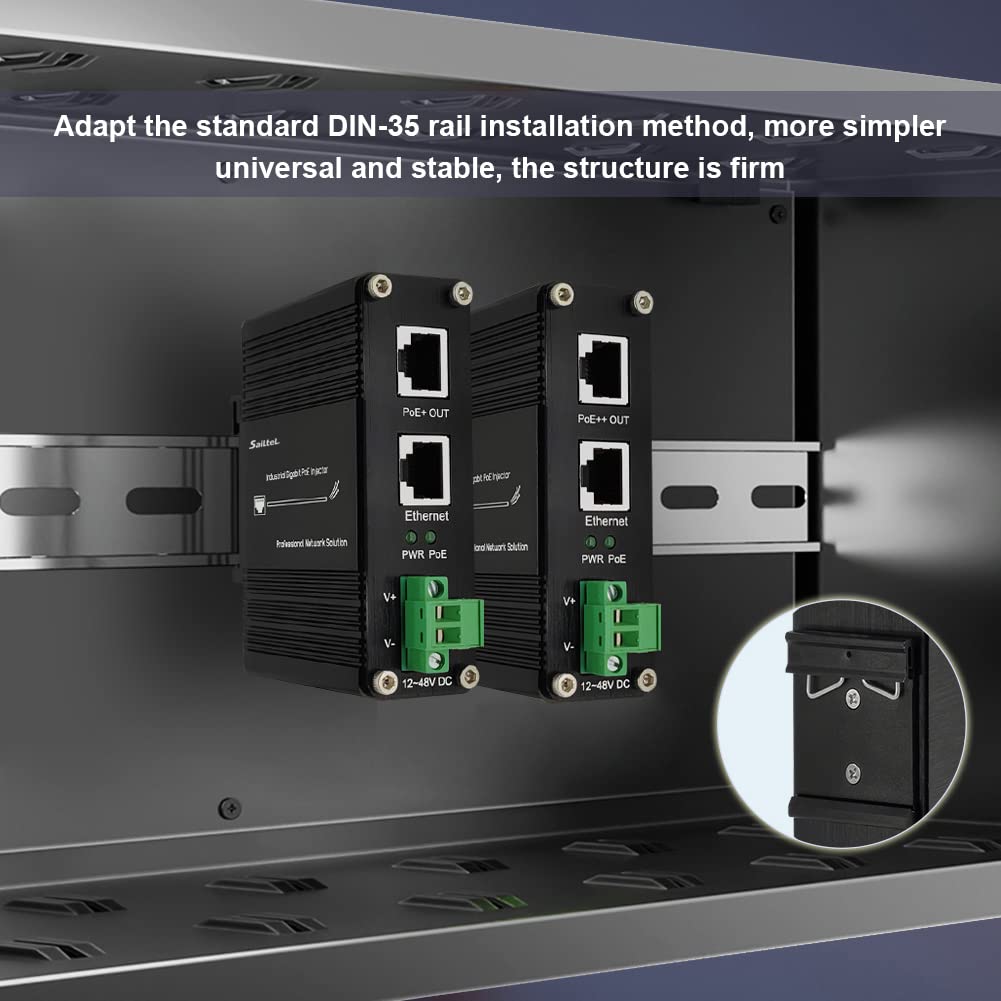
DIN-Rail / Wall-Mount
PoE & Power
Power Input & Output
DC Input
12–48V DC
Maximum PoE Output
30W
PoE Standard
IEEE 802.3af / IEEE 802.3at
Ports & Installation
Interfaces
Ethernet Data Input
1 × RJ45 Ethernet Data Input
PoE Output
1 × RJ45 PoE Output (Data + Power)
Installation
Mounting
DIN-Rail / Wall-Mount
Compatibility
Network & PoE Compatibility
PoE Standards
IEEE 802.3af / IEEE 802.3at
Ethernet
10/100/1000Base-T
Operating Temperature
-40°C to 80°C
Resources
Downloads
Technical documents will appear here when available.

Add PoE to Your Existing Network
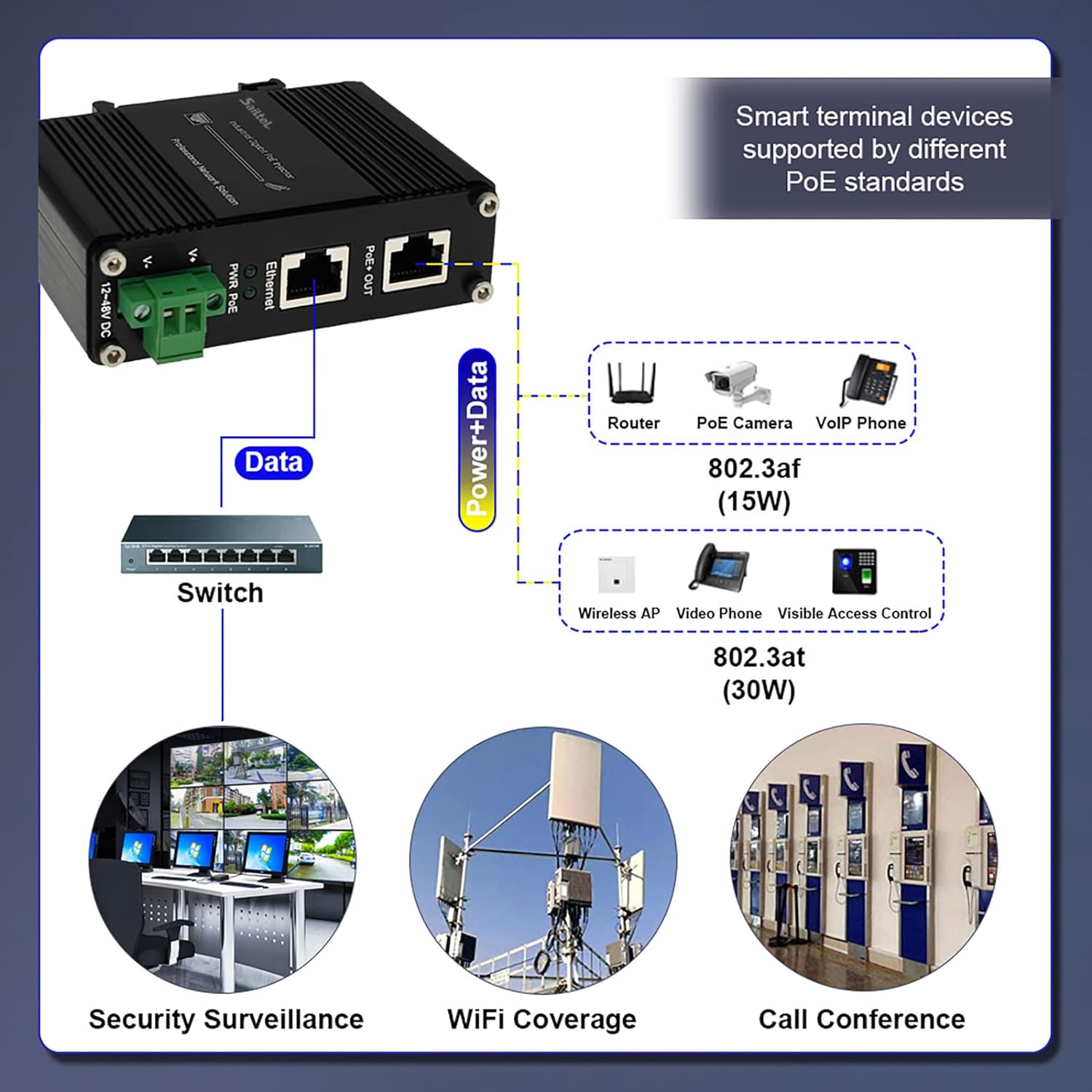
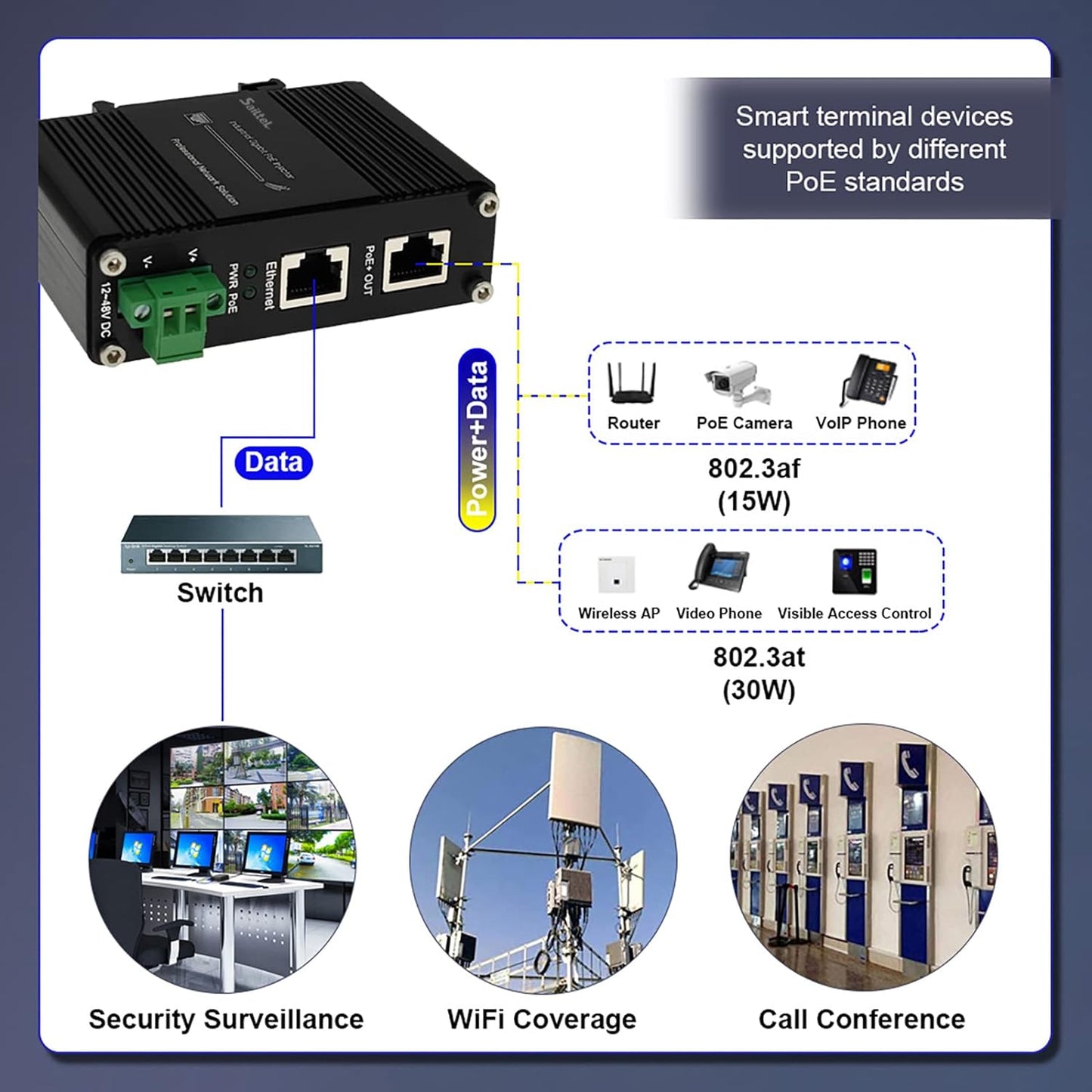
Connect a non-PoE switch to Data In and your powered device to PoE Out. The IPE95e adds up to 95W PoE power while maintaining Gigabit Ethernet connectivity.

DIN-Rail or Wall-Mount Installation
Install the IPE95e on a DIN rail or mount it directly to a wall for flexible deployment in industrial cabinets and edge network environments.
Typical Applications
-

IP Surveillance
Power PoE IP cameras from an existing non-PoE Ethernet network.
-

Wireless Access Points
Add PoE power for compatible wireless access points without replacing the existing network switch.
-

Industrial Edge Networks
Deploy PoE-powered devices in cabinets and industrial edge environments with 12–48V DC input.


Questions & Answers
Practical answers for selecting, connecting and deploying this PoE product.
What does a PoE injector do?
A PoE injector combines Ethernet data and DC power onto one Ethernet cable so a compatible PoE device can be powered from a network connection even when the existing switch does not provide PoE.
Can I use a PoE injector with a non-PoE network switch?
Yes. Connect the non-PoE switch to the Data In port and connect the powered device to the PoE Out port. The injector adds PoE power without requiring the existing switch to support PoE.
What devices can a PoE injector power?
A PoE injector can power compatible IEEE 802.3af, 802.3at or 802.3bt powered devices depending on the injector model. Typical devices include IP cameras, wireless access points, VoIP phones and other PoE-enabled network equipment.
What is the difference between a PoE injector and a PoE splitter?
A PoE injector adds power to an Ethernet connection. A PoE splitter does the reverse by separating PoE power and Ethernet data at the device end for equipment that does not accept PoE directly.
Does a PoE injector affect Ethernet speed?
The injector passes Ethernet data through at the data rate supported by the injector and connected devices. For a Gigabit injector, use compatible Gigabit network equipment and suitable Ethernet cabling to maintain Gigabit connectivity.
How far can a PoE injector transmit power and data?
A standard Ethernet link is typically designed for up to 100 meters between network devices. Actual performance depends on cable quality, conductor resistance, power demand and the installation environment.
How do I choose between IEEE 802.3af, 802.3at and 802.3bt PoE injectors?
Check the PoE standard and maximum power required by the powered device. IEEE 802.3af is intended for lower-power devices, 802.3at provides a higher PoE+ power level, and 802.3bt supports higher-power 4-pair PoE applications.
What should I check before selecting a PoE injector?
Check the powered device's PoE standard, required wattage, Ethernet speed, injector input voltage, cable distance, mounting method and operating temperature. The injector's available PoE budget should meet or exceed the device requirement.
What input voltage range does the IPE30e support?
The IPE30e supports a wide 12–48V DC input range, allowing it to operate with a wider variety of industrial DC power systems.
How much PoE power does the IPE30e provide?
The IPE30e is a 30W IEEE 802.3at industrial PoE injector designed for compatible PoE and PoE+ powered devices.
What is the difference between the IPE30e and a standard 30W industrial PoE injector?
The IPE30e is designed around a wide 12–48V DC input range and supports both DIN-rail and wall-mount installation, making it suitable for deployments where the available DC supply may vary.
Can the IPE30e be wall mounted?
Yes. The IPE30e supports both DIN-rail and wall-mount installation.
What operating temperature does the IPE30e support?
The IPE30e is designed for operation from -40°C to 80°C.